

Emergency Pharmacy Automated Medication Dispensing System

- FEATURES

Various Types
Equipped with industrial-grade robots with different suction cups or grippers available to suit various drugs in boxes, blister cards, ampoules and vials.

Concurrent Dispensing and Refilling
Dispensing and Refilling operated by two robotic arms, respectively, at one time.

Massive Storage
Holds a maximum of 80,000 to 100,000 injections with an optimized cube storage structure.

Batch Refilling
As simple as placing corresponding drugs (dozens or hundreds) into drawers for the robotic arm to complete storage.

Various Storage
Dedicated modules against collision for ampoules; Modules with partitions for drugs in boxes and blister cards; Modules for vials to store randomly.
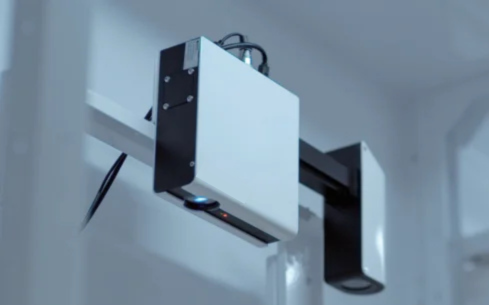
3D Recognition
Automatically verifies the position and quantity each time through 3D recognition.

Intelligent Basket
Automatically transfers filled baskets and empty ones to their positions.
- SPECIFICATION
| Equipment type: | INJ300 | INJ700 |
|---|---|---|
| Machine Size | 3445X2330X2630mm | 5908mm*2313mm*2739mm |
| Cover area | 7.98m² | 13.57m² |
| Weight | 2200kg | 2400kg |
| Types of drugs that can be stored | ||
| Ampoule | 1-10ML ,10mm<Diameter<72mm, Length<72mm | 1-10ML ,10mm<Diameter<72mm, Length<72mm |
| Vials | 1-50ML ,10mm<Diameter<72mm, Length<350mm | 1-50ML ,10mm<Diameter<72mm, Length<350mm |
| Bottle | Weight<250g,10mm<Diameter<72mm, Length<350mm | Weight<250g,10mm<Diameter<72mm, Length<350mm |
| Blister/Boxed-packed | The length * width * height data for each item cannot exceed 30-150mm, and the weight of a single item does not exceed 250g. | The length * width * height data for each item cannot exceed 30-150mm, and the weight of a single item does not exceed 250g. |
| Vials | 1-50ML ,10mm<Diameter<72mm, Length<350mm | 1-50ML ,10mm<Diameter<72mm, Length<350mm |
| Dispensing data | ||
| Durg process speed | 600blisters/hour | 600blisters/hour |
| prescription process speed | 120-150presritions /hour | 120-150presritions /hour |
| Dispensing data | ||
| Replenishment speed | 1000-1500 pcs / hour | 1000-1500 pcs / hour |
| Robot arm grippers | Can automatically switch between robotic arms to grab different medicines | Can automatically switch between robotic arms to grab different medicines |
| Power data | ||
| Power | 4KW,Static 150W | 4KW,Static 150W |
| Voltage | 220 V AC, 50-60 Hz | 220 V AC, 50-60 Hz |
| Noise | <60dB | <60dB |
| Communication interface | 2*RJ-45 WiFi-4G | 2*RJ-45 WiFi-4G |
| Storage capacity | ||
| Storage drawer size (L*W*H) | 370mm*168mm*72mm (4.4L) | 370mm*168mm*72mm (4.4L) |
| The number of storage drawer | 306pcs | 732pcs |
| Number of division plate for drawers | customized | customized |
| SKU | The storage of INJ-300 consists of 306 drawers , Each drawer can be equipped with division plate inside, Split into different SKUs. For example , the drawer in the picture is divided into 6 SKUs | The storage of INJ-300 consists of 306 drawers , Each drawer can be equipped with division plate inside, Split into different SKUs. For example , the drawer in the picture is divided into 6 SKUs |
| Total number of stored drug boxes (boxed) | 9,000Boxes (100mm*60mm*20mm) | 21,000 boxes (100mm*60mm*20mm) |
| Vials or Ampoule (10ml) | 42,000 pcs | 100,000pcs |
| Types of robotic grippers | 1:Ampoule gripper 2:Vials gripper 3:Box/Bottle/blister gripper | 1:Ampoule gripper 2:Vials gripper 3:Box/Bottle/blister gripper |
Frequently Asked Questions
How does the system verify that injectable medications are picked correctly?
The system uses visual recognition and a dedicated checking process to verify medication picking. A vision camera first confirms the position of the medications in the storage container, allowing the robotic arm to pick the required items accurately.
After picking, the medications pass through a checking point to confirm that the picking operation was completed correctly. If an incorrect medication is picked or extra items are detected, the system automatically directs them to the recovery outlet instead of continuing the normal dispensing process.
This multi-step verification helps reduce picking errors when automatically dispensing ampoules, vials, and other injectable medications.
Can returned injectable medications be replenished back into the system?
Yes. Injectable medications returned from hospital wards, as well as medications collected at the system’s recovery outlet, can be replenished back into the system.
Pharmacy staff place the returned medications at the replenishment station, where they are processed through the standard replenishment workflow before being returned to storage. This allows reusable medications to be returned to inventory in a controlled manner rather than being handled separately from the normal replenishment process.
How does the system manage injectable medications with different expiration dates?
The system manages medications by batch, with each medication container storing products from the same batch. When the same medication is available with different expiration dates, the system prioritizes the batch with the earlier expiration date for dispensing.
This FEFO (First Expired, First Out) approach helps pharmacies use medications with shorter remaining shelf lives first and supports better inventory rotation, reducing the risk of medications remaining in storage beyond their usable period.
Can the system dispense injectable medications for individual patients?
Yes. The system can receive prescription information and automatically dispense the required injectable medications for each individual patient. Ampoules, vials, and other supported medications prescribed for the same patient can be picked automatically and placed into a designated medication basket.
By organizing injectable medications according to individual prescriptions, the system helps reduce manual picking and sorting while making it easier for pharmacy staff to prepare and verify medications for each patient before they are sent to the ward or the next stage of the medication workflow.